
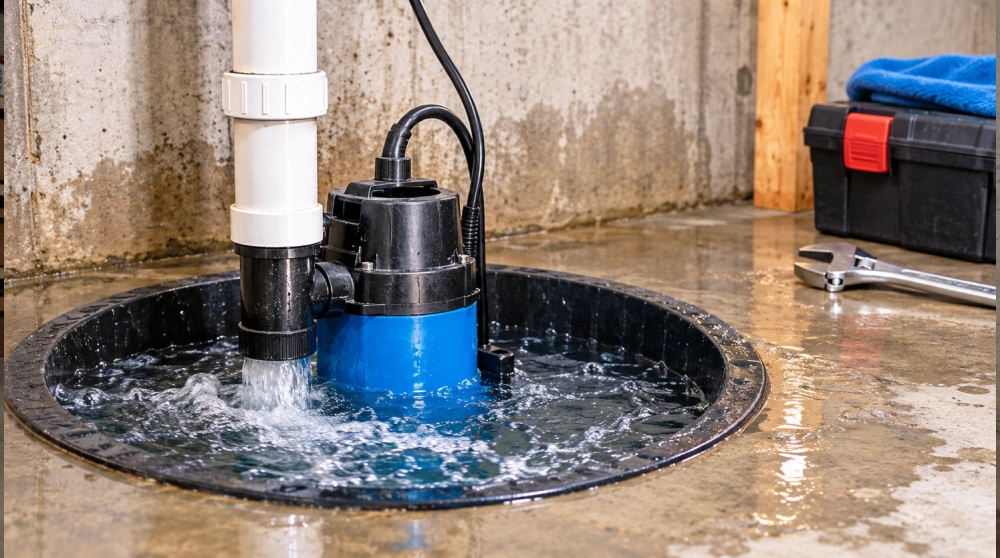
A sump pump running constantly is usually caused by a stuck float switch, a damaged check valve, a clogged or frozen discharge line, or groundwater entering the pit faster than the motor can handle. Unplugging the pump immediately protects the motor from overheating and burning out while you inspect the water level inside the basin.
Safety Precautions Before Checking the Pit
Working around standing water and electric pumps requires strict safety practices. Never reach into the sump pit while the power cord is plugged in, and avoid touching electrical outlets if the basement floor around the pit is wet.
- Disconnect power: Unplug the unit at the outlet before adjusting the float, inspecting pipes, or reaching into the basin. If the surrounding floor is wet, turn off the circuit breaker first.
- Verify GFCI protection: Ensure the pump connects to a ground-fault circuit interrupter (GFCI) outlet equipped with test and reset buttons.
- Avoid extension cords: Run the manufacturer’s power cord directly to a dedicated wall outlet. Extension cords create resistance that damages pump motors.
- Wear protective gloves: Basin water often carries ground bacteria, laundry discharge, or floor runoff. Wear heavy rubber gloves during inspection.
5-Minute Sump Pit Visual Diagnostic
You can identify most equipment issues quickly by inspecting the basin while the pump operates. Use a bright flashlight to observe the water movement and equipment alignment.
- Check the water level: Look inside the basin. If the pit is completely empty but the motor continues running, unplug it right away to prevent motor damage.
- Inspect the float position: See if the float hangs against the side of the basin, rests on top of the pump motor, or catches on power cords.
- Listen to the shutoff cycle: When the pump stops spinning, listen for a loud rushing sound of water dropping back down into the basin. This indicates valve failure.
- Inspect outdoor discharge points: Find where the drain pipe exits your home outside. Verify that water flows freely and doesn’t drain right back toward your foundation wall.
Key Reasons Your Sump Pump Won’t Shut Off
1. Stuck or Failed Float Switch
The float switch monitors water levels and signals the motor to start or stop. Because it moves continuously, it represents the most common point of failure. Tethered floats swinging on long cords can snag against basin walls, while vertical floats sliding on metal rods can bind due to mineral buildup or floating debris.
To test a piggyback float switch, disconnect the main plug from the wall. Unplug the pump cord from the back of the float plug, then plug the pump motor directly into the outlet for two seconds. If the motor runs smoothly, the pump itself works and the float switch requires adjustment or replacement.
2. Missing or Broken Check Valve
A check valve sits on the vertical discharge pipe above the basin, allowing water to exit while preventing backflow. When this one-way valve fails or was never installed, gallons of water inside the pipe pour right back into the pit the moment the pump turns off. The rising water immediately lifts the float switch again, triggering an endless cycling loop. Replacing a failed check valve typically costs between $15 and $40 in parts.
3. Air Locks and Impeller Clogs
Trapped air inside the pump housing keeps the motor spinning without moving water, a condition known as an air lock. Installing a small 1/8-inch to 3/16-inch weep hole in the discharge pipe between the pump and the check valve lets trapped air escape. Mud, gravel, and pit trash can also jam the spinning impeller. Raising the pump off the pit floor with a solid brick prevents it from sucking up bottom sediment.
4. Frozen or Blocked Discharge Piping
During freezing weather, discharge water can freeze inside outdoor corrugated hoses or exposed pipe outlets. When ice blocks the line, water has nowhere to go, causing the pump to run continuously against backpressure. Unchecked moisture issues around your basin can lead to expensive structural problems over time, raising potential foundation repair cost issues if left unaddressed.
5. High Groundwater Inflow or Plumbing Leaks
Heavy seasonal storms or a high water table can force water into your drainage pit continuously. If the inflow stops during dry weather, the system is simply handling heavy ground volume. However, steady inflow during dry spells may point to broken municipal pipes, leaking irrigation lines, or poor yard grading. Diverting surface runoff using proper downspout extensions or reviewing your overall gutter installation cost options helps reduce the volume of water entering your basement. Severe ground moisture problems may also call for evaluating a French drain installation cost to direct water away from the slab.
Sump Pump Replacement Costs and System Types
Published price guides put standard professional pump replacements between $300 and $750, with an average job cost around $490. Complete replacements with heavy-duty cast-iron hardware and battery backup units range from $1,200 to $2,500, while direct DIY replacement parts cost between $120 and $350.
| Pump Type and Rating | Equipment Cost | Total Installed Cost | Average Lifespan | Data Source Label |
|---|---|---|---|---|
| 1/3 HP Pedestal Pump | $80 – $180 | $280 – $520 | 8 – 12 years | Sourced |
| 1/3 HP Submersible (Plastic) | $90 – $160 | $320 – $580 | 3 – 5 years | Sourced |
| 1/2 HP Cast-Iron Submersible | $180 – $340 | $450 – $850 | 10 – 15 years | Sourced |
| 3/4 HP Commercial Submersible | $320 – $550 | $650 – $1,150 | 12 – 15 years | Sourced |
| Primary Pump + DC Battery Backup Combo | $450 – $950 | $1,200 – $2,400 | 7 – 10 years (battery 3 – 5 yrs) | Sourced |
| Water-Powered Backup Pump (City Water) | $220 – $450 | $750 – $1,500 | 15 – 20 years | Sourced |
Choosing the right horsepower rating depends on vertical lift height and water volume. For detailed pricing breakdowns by pump material and motor size, explore our comprehensive sump pump replacement cost guide.
When to Call a Licensed Professional
While clearing a jammed float switch or replacing an exterior check valve works as a straightforward DIY task, certain conditions require professional service. Contact a licensed plumber or electrician if:
- The electrical breaker trips repeatedly when the pump turns on.
- The motor hums constantly but fails to push water after clearing air locks and clogs.
- You need to install dual-pump redundancy or a water-powered backup unit connected to municipal lines.
- The pit requires structural modifications or larger plumbing discharge pipes.
Frequently Asked Questions
How long can a sump pump run continuously before burning out?
A standard submersible pump can overheat and suffer permanent motor failure within a few hours if it runs continuously without water in the pit to cool the housing.
Why does my sump pump run constantly even when it has not rained?
Continuous running during dry periods usually stems from a stuck float switch, a broken check valve allowing backflow, a high underground water table, or a nearby plumbing leak.
How much does it cost to fix a check valve on a sump pump?
Replacing a failed check valve is an affordable repair. The replacement valve costs between $15 and $40, and the installation requires basic hand tools.

