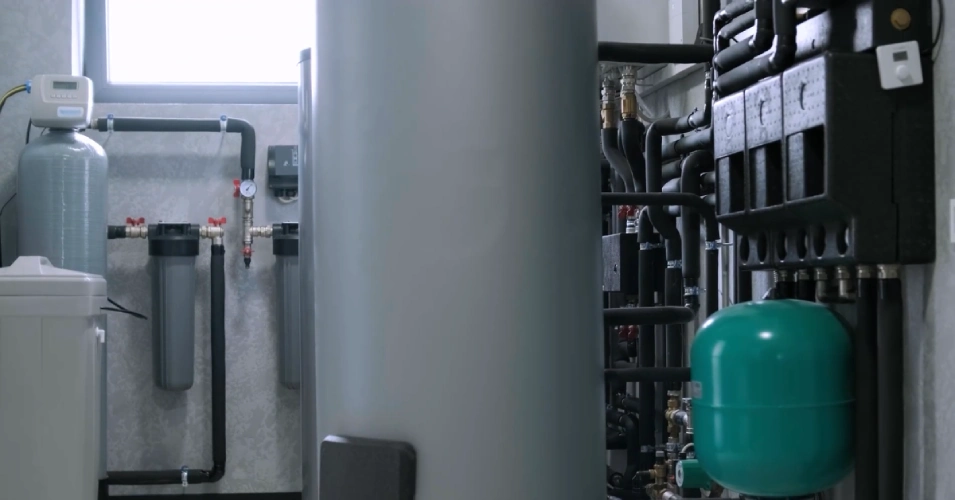
Tankless water heater installation costs between $1,400 and $3,900 for most American homes, with the national average sitting near $2,600. Direct replacement of an existing tankless unit costs between $1,200 and $2,200, while converting from a traditional 50-gallon storage tank to a whole-house gas system requiring new venting and larger gas lines ranges from $2,800 to $5,200.
Gas vs. Electric Tankless Water Heater Cost Comparison
Your existing household energy infrastructure determines whether natural gas or electric on-demand heating makes financial sense.
| Feature and Metric | Whole-House Gas Tankless | Whole-House Electric Tankless |
|---|---|---|
| Equipment Hardware Cost | $900 to $2,400 | $500 to $1,200 |
| Professional Installation Labor | $1,200 to $2,800 | $800 to $2,000 |
| Total Installed Cost | $2,100 to $5,200 | $1,300 to $3,200 |
| Flow Rate Capacity | 6.0 to 11.0 Gallons Per Minute (GPM) | 2.5 to 5.0 Gallons Per Minute (GPM) |
| Infrastructure Upgrades Required | 3/4-inch gas supply line, concentric PVC venting | 120 to 160 Amp electrical service, multiple 240V breakers |
| Performance in Cold Climates | Excellent (handles 40 degrees F groundwater easily) | Poor (struggles to supply two simultaneous fixtures) |
| Annual Operating Cost | $180 to $280 | $350 to $650 |
| Average Lifespan | 20+ years | 15 to 20 years |
If you are deciding between standard storage tanks, heat pumps, and tankless designs, review our baseline comparison on water heater replacement cost to calculate 10-year total cost of ownership across all three system categories.
Sizing by Gallons Per Minute (GPM) and Temperature Rise
Tankless heaters are sized by two interconnected metrics: flow rate demand and groundwater temperature rise.
- Peak Flow Rate: Calculated by adding up simultaneous fixtures. A modern low-flow showerhead draws 1.8 to 2.5 GPM, a kitchen faucet draws 1.5 GPM, and a washing machine draws 2.0 GPM. A household running two showers and a dishwasher concurrently requires a system rated for at least 6.5 to 8.0 GPM.
- Temperature Rise: The difference between incoming groundwater temperature and your desired output (typically 120 degrees F). In southern states where winter groundwater sits at 65 degrees F, heating water requires only a 55-degree rise. In northern states where winter municipal water drops to 38 degrees F, the unit must achieve a demanding 82-degree temperature rise, which cuts effective flow rate output in half.
Upgrading hot water delivery during major interior remodeling projects allows plumbing contractors to tie high-output manifold lines directly into new multi-jet shower systems outlined in our bathroom remodel cost guide.
Field Plumber Insights: Hidden Conversion Costs and Daily Quirks
Experienced master plumbers highlight critical installation requirements and behavioral quirks that catch homeowners off guard after converting from storage tanks.
1. The 199,000 BTU Gas Line Upgrade
A standard 40-gallon atmospheric gas water tank burns roughly 36,000 to 40,000 BTUs over an hour. A whole-house gas tankless unit demands an immense burst of energy: up to 199,000 BTUs instantaneously the second a shower valve opens. Most older homes have 1/2-inch black iron gas supply piping feeding the mechanical room. Running a dedicated 3/4-inch or 1-inch gas line from the gas meter to the new unit adds $400 to $1,200 to your installation invoice. Without adequate gas pressure, the heater will display error codes and shut off during cold snaps.
2. The Cold Water Sandwich Effect
Tankless heaters ignite only when water flow sensors detect motion. If you turn off the shower faucet for twenty seconds while shampooing and turn it back on, you will experience a brief burst of hot water, followed by five to ten seconds of unheated water that sat in the heat exchanger while the burner was off, followed by freshly heated water. Premium condensing models from Rinnai and Navien incorporate a built-in one-liter buffer tank or internal recirculation pump that eliminates this cold water sandwich completely.
3. Mandatory Annual Vinegar Descaling
Because tankless heat exchangers operate at extreme temperatures inside tight copper or stainless steel water passages, hard water minerals precipitate out rapidly. Without an annual 45-minute descaling flush using a small submersible utility pump and four gallons of plain white vinegar, mineral scale blankets the heat exchanger, drastically lowering efficiency and triggering early metal rupture. Installing isolation service valves ($90 to $140) during initial setup is mandatory so you can flush the unit yourself without hiring a plumber.
High-demand domestic hot water connections also service modern dishwashers and pot fillers featured in our detailed kitchen remodel cost overview.
Frequently Asked Questions (People Also Ask)
Do tankless water heaters really save money on utility bills?
Yes. According to Department of Energy testing, homes using under 41 gallons of hot water daily achieve 24% to 34% greater energy efficiency compared to standard storage tanks. Because tankless systems eliminate standby heat loss from water sitting in tanks all day, typical annual energy savings range between $100 and $180.
Why is electric tankless discouraged in northern climates?
Electric tankless units draw immense electrical current (often requiring 120 to 160 amps across three or four double-pole breakers), frequently necessitating a $2,500 electrical service panel upgrade. When northern winter groundwater drops below 40 degrees F, electric heating elements lack the power to supply more than a single 2.0 GPM fixture at a time.
How long does a tankless water heater last compared to a tank?
Quality tankless water heaters last 20 or more years when properly maintained with annual descaling, compared to traditional storage tanks that typically fail from internal tank corrosion within 8 to 12 years. Furthermore, individual tankless components (such as valves, heating elements, and computer boards) can be replaced modularly without discarding the entire unit.
Does a tankless water heater provide instant hot water?
Tankless heaters provide endless continuous hot water, but not instant hot water. The time required for hot water to reach your faucet still depends on the physical distance the water must travel through home piping. Installing a dedicated hot water recirculation loop or an under-sink point-of-use unit provides immediate delivery.