
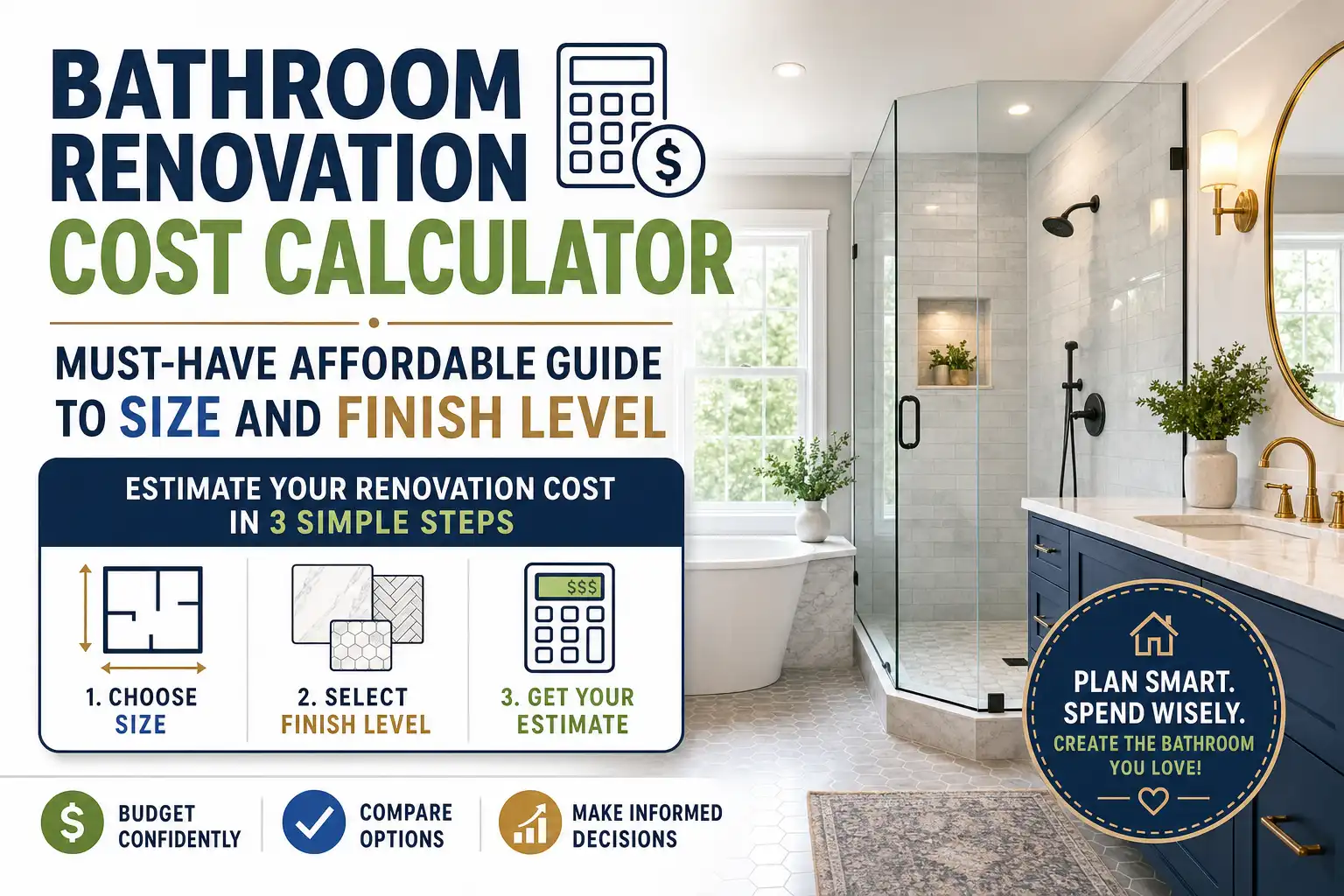
A bathroom renovation cost calculator helps you map out a realistic budget before any demolition begins. By entering details such as room size, finish level, project scope, and location, you can create a useful planning range instead of relying on a guess. The estimate can guide design decisions, show which upgrades matter most, and help you discuss the project clearly with contractors. Revisiting the bathroom renovation cost calculator as selections change also helps keep the budget current.
What is a bathroom renovation cost calculator and why it matters
A bathroom renovation cost calculator is an estimate tool that organizes the main factors affecting a remodel budget. It typically asks for the room’s square footage, scope of work, finish level, plumbing or electrical changes, and local labor conditions. The result should be treated as a planning range rather than a guaranteed quote.
A useful bathroom renovation cost calculator separates the major cost categories instead of presenting one unexplained total. Those categories may include demolition, disposal, rough-in plumbing, electrical work, waterproofing, tile, cabinetry, countertops, fixtures, ventilation, permits, and installation. Seeing the categories makes it easier to identify an expensive choice and test a less costly alternative.
Estimates are most valuable early in the process. Before ordering materials or signing a contract, use the bathroom renovation cost calculator to compare a cosmetic update with a full remodel, evaluate layout changes, and set aside money for surprises. You can then compare contractor proposals more accurately because you understand what each bid includes and what may be excluded.
How size and finish level drive costs

Size, square footage, and layout
Room size is one of the most influential cost factors. A larger bathroom usually needs more tile, backer board, grout, paint, flooring, trim, and labor. It may also require more lighting, additional ventilation, a larger vanity, or a more substantial shower enclosure. Material quantities rise with the room’s dimensions, while installation time often increases as the number of surfaces and details grows.
Square footage is only part of the calculation. Layout complexity can matter just as much. Keeping the toilet, shower, tub, and sink in their current positions usually limits plumbing changes. Moving a toilet, rerouting a shower drain, or relocating a vanity can require new supply lines, drain work, electrical adjustments, permits, and repairs to the floor or wall. These changes may be worthwhile, but they deserve a separate line in the budget.
Odd corners, alcoves, niches, sloped ceilings, and multiple door openings can also increase labor. They create more cuts, more measuring, and more opportunities for material waste. A compact bathroom with a complicated layout may cost more to finish than a larger, straightforward room. When measuring, record length, width, ceiling height, openings, windows, and the locations of existing fixtures. A bathroom renovation cost calculator can account for these details more accurately when the measurements and layout notes are complete.
Entering both square footage and layout changes helps a bathroom renovation cost calculator produce a more useful range. Two bathrooms of the same size can have very different budgets if one keeps its existing plumbing while the other moves every fixture. Make separate notes for work that changes the room’s footprint, drain locations, walls, or door openings.
Finish level and fixture choices
Finish level describes the quality, appearance, and customization of the materials and fixtures you select. A basic project may use stock products and make mostly cosmetic changes. A standard or mid-range project generally combines dependable fixtures with attractive, durable finishes. A premium project may include custom cabinetry, natural stone, designer fixtures, specialty tile, and advanced technology.
Tile selection has a noticeable effect on both materials and labor. Standard ceramic or porcelain tile is often easier to source and install than intricate mosaics, handmade tile, large-format slabs, or natural stone. Patterned layouts can create more offcuts, while small mosaics require additional setting and grouting time. Ask how a tile choice affects installation, maintenance, sealing, and future replacement before committing.
Fixtures can create a similar range. A standard vanity, readily available faucet, framed mirror, and basic light fixture can keep a project predictable. Custom cabinetry, specialty hardware, frameless glass, wall-mounted toilets, body sprays, digital shower controls, and designer faucets add cost and may require specialized installation. Durable mid-range selections often provide a practical balance between appearance and budget. Record specialty choices separately in the bathroom renovation cost calculator so their effect remains visible.
Ventilation and waterproofing should not be treated as optional style upgrades. A properly sized exhaust fan, suitable moisture-resistant materials, and correctly installed shower waterproofing protect the room from excess humidity and water damage. For water-efficient fixtures, the U.S. Environmental Protection Agency’s WaterSense program provides guidance that can help you compare efficient products.
Within a bathroom renovation cost calculator, finish level should represent the full group of selected products rather than one standout feature. If most selections are standard but the project includes custom glass or natural stone, enter those upgrades separately. This avoids pricing the entire room as luxury when only a few elements require premium allowances.
Budgeting framework by size and finish level
To keep a remodel affordable while achieving a satisfying result, organize the project around three finish levels and then adjust for room size, layout, and local labor. A bathroom renovation cost calculator works best when the finish category reflects the actual products you are considering rather than an aspirational style board.
- Basic or budget-friendly: Focus on cosmetic updates with minimal disruption. This may include paint, new hardware, a reglazed tub, a replacement mirror, a simple vanity, updated lighting, and a standard faucet. Keeping the existing layout is especially helpful at this level.
- Standard or mid-range: Balance durability, appearance, and installation complexity. Common choices include a new shower surround or tile, a dependable vanity, a solid or composite countertop, updated flooring, efficient lighting, and quality faucets. This level suits many homeowners seeking a complete refresh without highly customized details.
- Premium or luxury: Include high-end tile, natural stone, custom cabinetry, specialty glass, designer fixtures, heated floors, smart controls, or a redesigned layout. This approach can deliver a distinctive result, but it requires more planning, longer lead times, and a larger contingency.
Size and finish are the two levers you can adjust most easily. For example, a standard-size bathroom with a simple tile pattern and a stock vanity is usually more predictable than a uniquely shaped room with custom stone and a complex installation. You can preserve the visual effect of an expensive design by using a premium material selectively, such as on a feature wall, while choosing simpler products elsewhere.
It is also useful to divide the budget into fixed, flexible, and uncertain costs. Permits, basic demolition, required ventilation, and necessary plumbing repairs may be difficult to eliminate. Tile style, hardware, mirrors, lighting, and accessories are often more flexible. Hidden water damage, subfloor rot, and outdated wiring are uncertain costs that should be addressed through a contingency rather than ignored. Keeping these groups distinct in the bathroom renovation cost calculator makes later budget adjustments easier to evaluate.
After a bathroom renovation cost calculator establishes an initial range, compare it with a detailed guide to bathroom remodel costs by size and finish level. Reviewing both the overall range and individual cost categories can reveal whether your allowance for labor, fixtures, or preparation is unrealistic.
How to use the bathroom renovation cost calculator
Step 1: Measure the space
Begin with accurate measurements. Record the room length and width, ceiling height, door and window dimensions, and the location of every fixture. Measure the shower or tub area, vanity footprint, and any built-in storage. Note alcoves, niches, radiators, sloped ceilings, and other features that may affect material quantities or installation.
Make a simple sketch and label existing water supply lines, drains, electrical outlets, light locations, and the exhaust fan. If you plan to change the layout, mark the proposed positions separately. Accurate inputs make the bathroom renovation cost calculator more reliable and prevent it from assuming that a fixture can be moved without additional plumbing or electrical work.
Step 2: Choose your finish level
Select Basic, Standard, or Premium as the starting point. Use actual examples when possible: the type of tile, vanity construction, countertop, faucet, shower door, lighting, and flooring you expect to buy. If you are unsure, begin with a standard selection and create a second version with one or two upgrades. Running the bathroom renovation cost calculator more than once shows which improvements have the greatest effect on the total.
Step 3: Add fixtures and upgrades
Indicate whether you will keep or replace the tub, shower, toilet, vanity, sink, faucets, mirror, lighting, flooring, and exhaust fan. Include accessories such as towel bars, shelving, medicine cabinets, and storage. Add heated floors, towel warmers, smart lights, digital shower controls, or accessibility features as separate items so their effect is visible.
Do not overlook preparation work. A project may need demolition, disposal, surface repair, new backer board, waterproofing, subfloor replacement, caulking, grout sealing, or painting. These tasks may not appear in an inspiration photo, but they affect the finished price and timeline. Listing them separately keeps the bathroom renovation cost calculator from understating the less visible parts of the job.
Step 4: Account for location, permits, and contingencies
Labor rates vary by region, season, contractor availability, and project complexity. Confirm which permits may be required for plumbing, electrical, structural, or ventilation work. Permit requirements and fees differ by jurisdiction, so check with your local building department rather than assuming that a small room needs no approval.
A bathroom renovation cost calculator should include a contingency for unforeseen conditions. Many homeowners use a planning allowance of about 10% to 20%, with the higher end more appropriate for older homes, major layout changes, or areas with a history of moisture problems. A contingency is not money to spend automatically; it is protection against discovering damaged framing, leaking supply lines, unsafe wiring, or a deteriorated subfloor.
How to read a bathroom renovation cost calculator estimate
The total from a bathroom renovation cost calculator should normally be read as a range, not a single guaranteed price. The lower end may represent straightforward installation, readily available products, and minimal repairs. The upper end allows for more complex labor, premium selections, regional pricing differences, and some uncertainty in existing conditions.
Review the subtotal before contingency separately from the final planning figure. If the estimate includes an allowance for unknown conditions, do not immediately assign that money to decorative upgrades. Rerun the bathroom renovation cost calculator after products are selected or contractor information becomes available, but continue protecting the contingency until concealed areas have been inspected.
Pay attention to assumptions behind the result. An estimate may assume that the electrical panel has sufficient capacity, plumbing lines are serviceable, walls are sound, and the subfloor is dry. If the house is older or has experienced leaks, ask a qualified professional to inspect questionable systems. Correcting those assumptions early is more useful than refining small decorative allowances.
Also separate product prices from installed prices. A shower door, vanity, or tile may appear affordable on its own but require delivery, preparation, specialty tools, additional materials, or professional installation. Taxes, shipping, debris removal, and minimum service charges can also affect the completed cost.
Practical example: estimating a mid-range renovation
Consider a small-to-medium bathroom of about 40 square feet. A standard finish level might include a replacement vanity with a durable countertop, updated flooring, a new shower surround or tiled wet area, improved lighting, a modern faucet set, and fresh paint. Keeping the toilet, shower, and vanity near their existing positions can reduce the plumbing and electrical portion of the project.
Next, separate the visible products from the supporting work. Visible products include the vanity, countertop, toilet, faucet, mirror, lights, tile, and shower door. Supporting work includes demolition, disposal, surface preparation, waterproofing, installation, caulking, painting, permits, and cleanup. A realistic estimate includes both groups because labor and preparation can represent a significant share of the total. Entering both groups in the bathroom renovation cost calculator reduces the risk of overlooking essential work.
Now test alternatives. A stock vanity may cost less and arrive sooner than custom cabinetry. A standard tile pattern may reduce installation time compared with a detailed mosaic. Keeping the current drain locations may be less expensive than moving them. If a heated floor or premium faucet is a priority, you can add it while reducing spending on less important accessories.
For many households, a cosmetic refresh with paint, updated hardware, a reglazed tub, a new mirror, and a simple vanity can remain well below the cost of a full renovation. A complete mid-range project generally requires a larger budget because it combines several trades and may expose hidden conditions. Luxury features raise material and labor costs further, but the bathroom renovation cost calculator still helps you judge whether the result is feasible.
Bathroom remodel cost categories to include
A bathroom renovation cost calculator should account for all the following categories when you review an estimate or contractor proposal:
- Planning and design: Measurements, drawings, product research, design services, and scheduling.
- Demolition and disposal: Removal of tile, cabinetry, fixtures, flooring, drywall, and construction debris.
- Plumbing: Supply lines, drains, shutoff valves, fixture connections, and layout changes.
- Electrical: Outlets, switches, lighting, circuits, mirrors, fans, and required safety devices.
- Waterproofing and preparation: Backer board, membranes, subfloor repairs, framing, leveling, and moisture protection.
- Surfaces: Tile, flooring, grout, caulk, paint, trim, and countertop materials.
- Fixtures and cabinetry: Vanity, sink, toilet, tub, shower system, faucets, storage, and hardware.
- Ventilation and comfort: Exhaust fan, heating, heated floors, towel warmers, and humidity controls.
- Labor and project management: Installation, inspections, coordination among trades, cleanup, and final adjustments.
- Permits and contingency: Local fees and an allowance for hidden conditions or approved changes.
When comparing bids, ask whether each category is included, estimated, or excluded. A low bid may omit demolition, disposal, waterproofing, permit fees, or finish installation. Request clarification in writing and compare complete scopes rather than comparing totals alone.
Ways to control the budget without sacrificing quality
- Keep the existing fixture layout when it works for your household.
- Choose standard vanity widths and readily available fixtures.
- Use premium tile or hardware as an accent rather than throughout the room.
- Compare total installed cost, not just the price of the product.
- Order materials early and confirm quantities, colors, and return policies.
- Repair ventilation and waterproofing problems before adding decorative upgrades.
- Bundle related work so trades do not need to return repeatedly.
- Leave a contingency untouched until the project is complete.
Using a bathroom renovation cost calculator to test one change at a time can identify the most effective savings. Compare the same plan with a stock vanity, simpler tile pattern, standard shower glass, or unchanged plumbing locations. This method shows whether a substitution meaningfully reduces the total rather than merely lowering one product price.
Saving money should not mean removing essential waterproofing, electrical safety work, ventilation, or structural repairs. Those systems protect the room and may prevent much more expensive damage. Instead, reduce cost through layout discipline, product selection, simpler patterns, and careful scheduling.
Common planning mistakes
One common mistake is budgeting only for the products shown in a showroom. The tile, vanity, and faucet are visible, but demolition, preparation, installation, disposal, permits, and cleanup also require time and money. Another mistake is choosing products before confirming measurements. A vanity that looks suitable online may interfere with a door, plumbing connection, outlet, or walkway.
Homeowners also sometimes underestimate lead times and substitute materials after work has started. A missing tile or delayed shower door can extend the project and create additional labor costs. Confirm availability before demolition, keep a record of product names and colors, and order enough material for cuts and future repairs. Updating the bathroom renovation cost calculator when products or quantities change helps prevent these substitutions from quietly exceeding the budget.
Finally, avoid treating an online estimate as a contractor quote. The bathroom renovation cost calculator cannot inspect hidden conditions, access to the home, existing damage, code requirements, or workmanship standards. Use it for planning, then ask qualified contractors for detailed proposals based on an in-person assessment.
Comparing the estimate with contractor bids
Bring the bathroom renovation cost calculator results, measurements, product list, and preferred layout to contractor meetings. Give each contractor the same information so the proposals cover a comparable scope. Ask for labor, materials, allowances, permit responsibilities, payment timing, exclusions, and change-order procedures to be explained in writing.
If a bid differs significantly from the bathroom renovation cost calculator range, identify the reason rather than assuming that either figure is wrong. The contractor may have included repairs, code upgrades, project management, or premium installation details that were absent from the initial estimate. Conversely, a proposal may appear low because fixtures, disposal, painting, permits, or waterproofing are excluded.
Allowances deserve particular attention. An allowance is a placeholder for a product or task that has not been finalized. Ask whether it covers the product only or also includes tax, shipping, preparation, and installation. If your preferred tile or vanity exceeds the allowance, the difference may increase the contract price and could also affect associated labor.
Compare schedules and responsibilities as well as prices. Confirm who orders materials, checks deliveries, protects adjacent rooms, arranges inspections, removes debris, and completes final touch-ups. A detailed proposal can cost more than a vague one while still offering better value and fewer opportunities for disputes.
Final planning checklist
Run the bathroom renovation cost calculator after confirming the room measurements, desired layout, finish level, fixture list, tile selections, ventilation plan, and storage needs. Decide which features are essential and which can be postponed. Check permit requirements, collect product specifications, verify lead times, and set aside a contingency for hidden conditions.
Using a bathroom renovation cost calculator throughout the planning process lets you compare bids, test “what-if” scenarios, and keep decisions aligned with your budget. By focusing first on layout, waterproofing, ventilation, and durable essentials, you can then spend selectively on the finishes that make the bathroom feel personal. The result is a functional, stylish renovation with fewer financial surprises and a clearer path from idea to completion.

