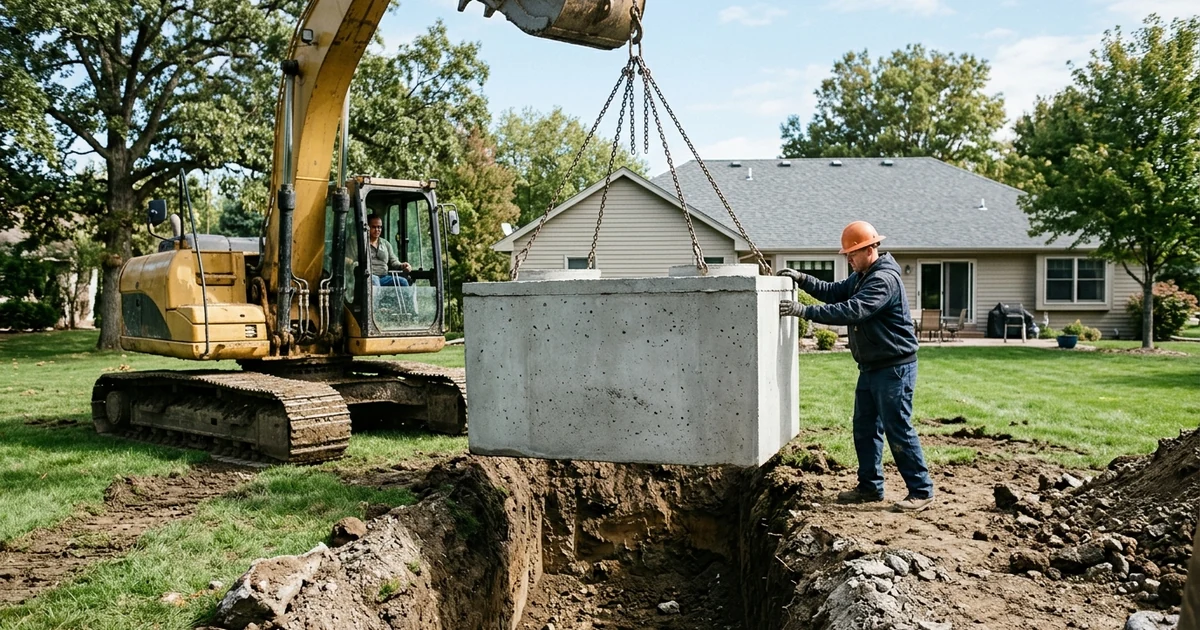
The national average septic tank replacement cost ranges from $3,500 to $8,500 for a standard residential tank swap, with most homeowners paying approximately $6,200 for a turnkey 1,000-gallon concrete installation. If your drain field remains fully operational and only the buried vessel requires replacement due to structural cracking, baffle collapse, or root intrusion, overall expenses stay within this baseline. However, if soil saturation or biomat buildup has caused complete leach field failure, a full engineered system replacement typically costs between $12,000 and $25,000, and can exceed $35,000 for complex sand mound or aerobic treatment units.
Total replacement expenses break down into equipment procurement, site excavation, old tank abandonment, and county health department permits. Understanding the performance characteristics of different tank materials and sizing standards ensures you choose an installation that complies with local environmental regulations and prevents premature structural failure.
| System scope | Average cost range | Labor and site prep | Typical timeline | Primary application |
|---|---|---|---|---|
| Tank-only swap (direct replacement) | $3,500 – $8,500 | $2,000 – $4,500 | 1 – 2 business days | Functional drain field with cracked or deteriorated tank |
| Full gravity system (tank and leach field) | $10,000 – $22,000 | $6,000 – $13,000 | 3 – 5 business days | Complete system failure on permeable soil |
| Aerobic treatment unit (ATU) | $11,000 – $26,000 | $5,500 – $12,000 | 4 – 6 business days | Small lots, sensitive watersheds, or strict environmental codes |
| Engineered sand mound system | $16,000 – $35,000+ | $9,000 – $18,000 | 5 – 8 business days | High water tables, shallow bedrock, or impermeable heavy clay |
Septic Tank Replacement Cost by Material
The material composition of your replacement septic tank directly influences equipment pricing, excavation machinery requirements, and long-term durability. While heavy precast concrete represents the industry standard across most residential jurisdictions, lightweight synthetic alternatives offer distinct installation advantages on sites with restricted access.
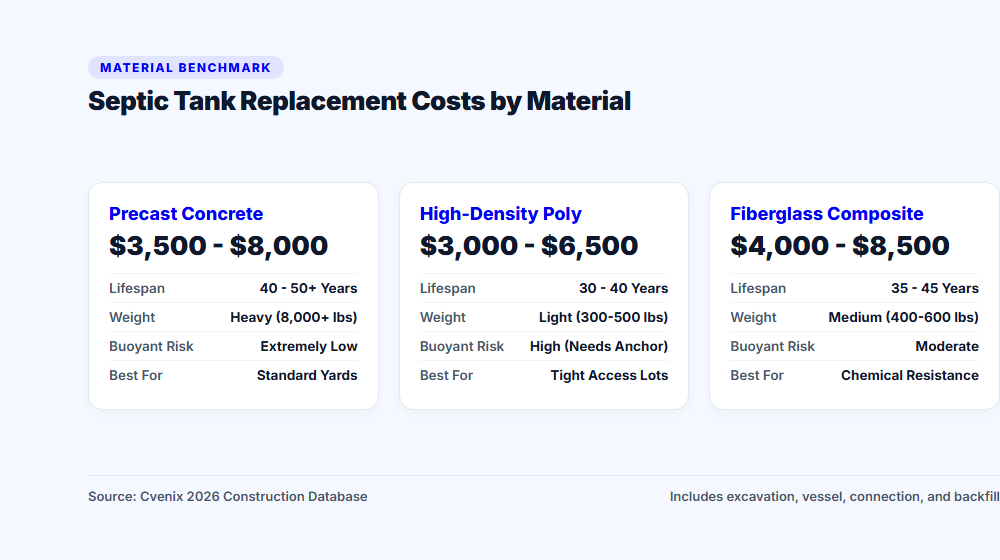
| Tank material | Material purchase cost | Turnkey installed cost | Expected lifespan | Structural advantages and risks |
|---|---|---|---|---|
| Precast concrete | $1,100 – $2,500 | $3,500 – $8,000 | 40 – 50+ years | Extremely durable, resists soil buoyant pressure, requires boom crane |
| High-density polyethylene (plastic) | $900 – $2,100 | $3,000 – $6,500 | 30 – 40 years | Rust-proof, lightweight, susceptible to shifting or floating in high water tables |
| Fiberglass composite | $1,400 – $2,800 | $4,000 – $8,500 | 35 – 45 years | Chemical resistant, light weight, durable seam seals, higher unit price |
| Galvanized steel | $800 – $1,600 | $3,200 – $6,000 | 15 – 20 years | Prone to internal rust and structural cave-ins; banned in most modern codes |
Precast concrete tanks remain the preferred choice among licensed excavators because their substantial mass (often weighing 8,000 to 12,000 pounds) prevents hydraulic flotation when regional water tables rise after heavy rainfall. Plastic and fiberglass tanks, while significantly easier to deliver down tight suburban easements, require careful anchoring or concrete ballast collars to prevent upward displacement when pumped dry.
Septic Tank Sizing and Replacement Cost by Bedroom Count
Local plumbing codes and county health departments mandate septic tank volume based on the total bedroom count of your home rather than the current number of occupants. Sizing standards ensure sufficient hydraulic retention time, allowing solid waste to settle into sludge while fats and grease rise into the scum layer before effluent discharges toward the disposal field.
| Home size (bedrooms) | Minimum tank capacity | Tank purchase price | Installed replacement cost | Daily wastewater flow design |
|---|---|---|---|---|
| 1 to 2 bedrooms | 750 – 900 gallons | $800 – $1,400 | $3,200 – $5,500 | 200 – 300 gallons/day |
| 3 bedrooms | 1,000 gallons | $1,000 – $1,700 | $3,800 – $7,000 | 360 – 450 gallons/day |
| 4 bedrooms | 1,250 gallons | $1,400 – $2,300 | $4,500 – $8,200 | 480 – 600 gallons/day |
| 5 to 6 bedrooms | 1,500 – 1,750 gallons | $1,800 – $3,200 | $5,800 – $10,500 | 600 – 800 gallons/day |
| Large custom homes (6+ beds) | 2,000+ gallons or twin tanks | $2,500 – $4,800 | $7,500 – $14,000 | 800+ gallons/day |
Complete Septic System Replacement Costs by Technology
When site testing reveals that the existing absorption field has suffered irreversible hydraulic failure, replacing the entire wastewater treatment system becomes necessary. The specific design mandated by your civil engineer depends on soil permeability, bedrock depth, and proximity to municipal water bodies.
- Conventional Gravity Systems ($7,000 to $15,000): Utilize natural downhill slope to convey treated liquid from a single or dual-compartment tank into gravel-lined perforated trench pipes. Best suited for deep, well-draining loamy soils with deep groundwater.
- Chamber Drain Field Systems ($8,500 to $17,000): Replace traditional crushed gravel beds with corrugated, arch-shaped plastic chambers, reducing heavy haul delivery costs and soil compaction during machinery staging.
- Aerobic Treatment Units ($10,000 to $24,000): Incorporate an electric air compressor and mechanical diffusers directly into the primary vessel, injecting dissolved oxygen to cultivate aerobic bacteria that digest waste significantly faster than anaerobic microbes.
- Engineered Sand Mound Systems ($15,000 to $32,000+): Constructed above native grade with imported coarse sand aggregate, gravel, and pressure distribution piping when regional bedrock or water tables sit within 24 to 36 inches of the ground surface.
- Drip Distribution Systems ($18,000 to $35,000): Deliver micro-doses of pre-filtered effluent through flexible shallow tubing placed 6 to 12 inches beneath topsoil, preventing pooling on heavily sloped parcels.
Labor, Excavation, and Permitting Cost Breakdown
Physical vessel costs frequently account for less than 35% of your final contractor invoice. The remaining investment covers specialized heavy equipment operation, soil analysis, environmental compliance documentation, and hazardous waste decommissioning.
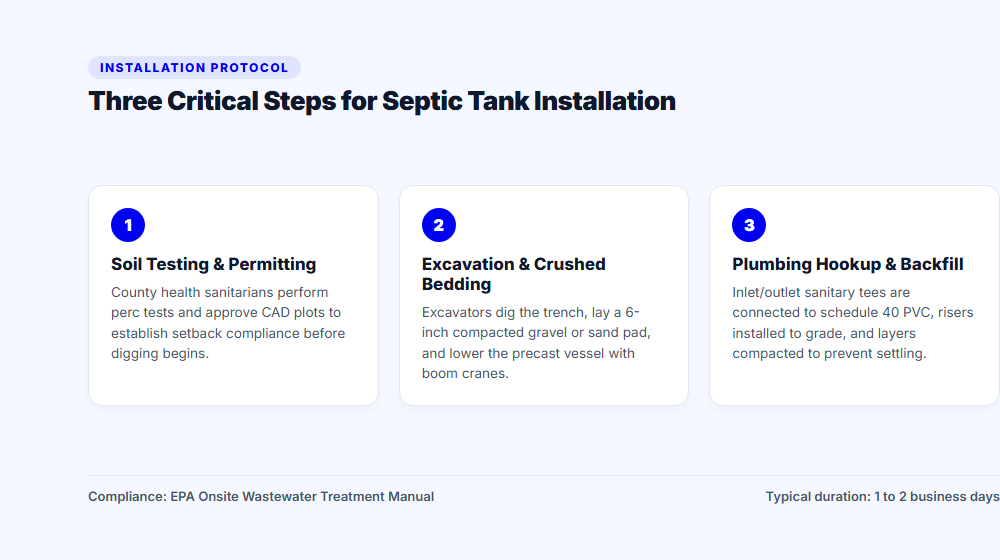
| Project phase | Typical cost range | Detailed cost factors |
|---|---|---|
| Soil percolation test (perc test) | $450 – $1,500 | Licensed sanitarian evaluation, backhoe test pits, percolation rate timing |
| Health department engineering permit | $250 – $1,200 | County filing fees, professional engineer CAD plot plans, site inspections |
| Old tank pumping and abandonment | $500 – $1,500 | Pumping remaining sludge, crushing concrete top, filling cavity with sand or gravel |
| Excavation and trenching labor | $1,800 – $4,500 | Tracked mini-excavator operation, operator hourly rates ($100-$200/hr), tree clearance |
| Bedding material (crushed stone or sand) | $300 – $900 | Compacted level bed preparation beneath precast concrete to avoid unlevel settling |
| Electrical supply line and alarm panel | $600 – $1,400 | Trenching underground conduit and dedicated circuit for high-water float alarm |
| Final grading and turf restoration | $800 – $2,500 | Topsoil spreading, hydroseeding, hay erosion control, and sod reinstatement |
State-by-State Septic Replacement Cost Factors
Regional geological characteristics dictate the engineering complexity of septic replacements across the United States. High water tables in coastal regions or shallow granite bedrock in northern climates require advanced treatment technology, whereas arid southwestern soils allow standard gravity configurations.
| State / Region | Average tank swap | Full system average | Dominant regional challenges |
|---|---|---|---|
| Texas (Central and Gulf Coast) | $3,800 – $6,500 | $9,500 – $18,000 | Expansive caliche and heavy clay; aerobic systems common in rocky hill country |
| Florida (Statewide) | $4,500 – $7,800 | $11,000 – $22,000 | Extremely high seasonal water table; nitrogen reduction mandates near springs |
| California (Coastal and Sierra) | $5,500 – $9,800 | $16,000 – $35,000 | Strict regional water quality board permits, seismic anchoring, rocky terrain |
| Ohio and Midwest | $3,400 – $6,200 | $10,000 – $19,000 | Seasonal frost depth requirements (36 to 48 inches depth), dense glacial till |
| North Carolina and Piedmont | $3,600 – $6,800 | $9,000 – $17,500 | Dense red clay soils requiring extensive sand filter beds or dual tanks |
| Pennsylvania and Northeast | $4,200 – $8,000 | $13,000 – $26,000 | Shallow bedrock formations; elevated sand mounds frequently required by state code |
Replacing Just the Tank vs. Replacing the Entire System
One of the most consequential decisions facing homeowners during a plumbing emergency is determining whether their drain field can be preserved. A damaged tank does not automatically necessitate total system replacement, provided the soil absorption trenches remain unclogged.
When you only need to replace the tank:
- The concrete lid or tank baffle has deteriorated due to hydrogen sulfide gas corrosion, but the effluent filter has prevented solids from escaping into the leach lines.
- Ground shifting or vehicular traffic over an unreinforced tank has cracked the sidewalls, resulting in ground infiltration without drain field biomat clogging.
- A septic camera inspection confirms that liquid drains freely from the distribution box into all lateral lines without standing backpressure.
When you must replace the entire absorption system:
- Dark, foul-smelling wastewater pools on the lawn surface directly above the disposal field after standard household showers or laundry loads.
- Pumping the tank provides only temporary relief for 24 to 48 hours before plumbing fixtures back up into basement drains.
- Years of missed maintenance intervals allowed solid sludge to spill over into the perforated PVC network, creating an impenetrable biological barrier in the surrounding gravel bed.
Frequently Asked Questions About Septic Tank Replacement
How long does a concrete septic tank typically last?
A professionally poured precast concrete septic tank lasts between 40 and 50 years under normal residential usage conditions. However, tank baffles and access risers may experience biogenic sulfuric acid corrosion after 20 to 25 years, requiring targeted baffle repair before the entire vessel fails.
Can I replace a septic tank in the same location as the old one?
Yes, in many cases excavators can pull the old damaged tank and set the replacement vessel into the exact same excavation hole. However, if the old tank cannot be safely extracted without collapsing adjacent soil, or if county setback codes have changed since the home was built, contractors will abandon the old tank in place with clean sand and excavate a new location.
Does homeowners insurance cover septic tank replacement costs?
Standard homeowners insurance policies exclude coverage for gradual wear, age-related degradation, tree root intrusion, or lack of routine maintenance. Coverage generally applies only if the septic tank suffers sudden, accidental damage from an external peril, such as an explosion, vandalism, or an out-of-control vehicle striking the buried structure.
How much does a soil percolation test cost before septic installation?
A professional soil percolation test typically costs between $450 and $1,500. This procedure evaluates how quickly water absorbs through your native soil strata, which dictates the size, depth, and specific engineering design required for health department permit approval.
What happens to the old septic tank when it is replaced?
Under international plumbing and environmental codes, an abandoned septic tank must be pumped clean by a licensed waste hauler, the structural lid must be caved in or removed, and the remaining cavity must be completely filled with compacted sand, pea gravel, or cementitious slurry to prevent catastrophic sinkholes.