
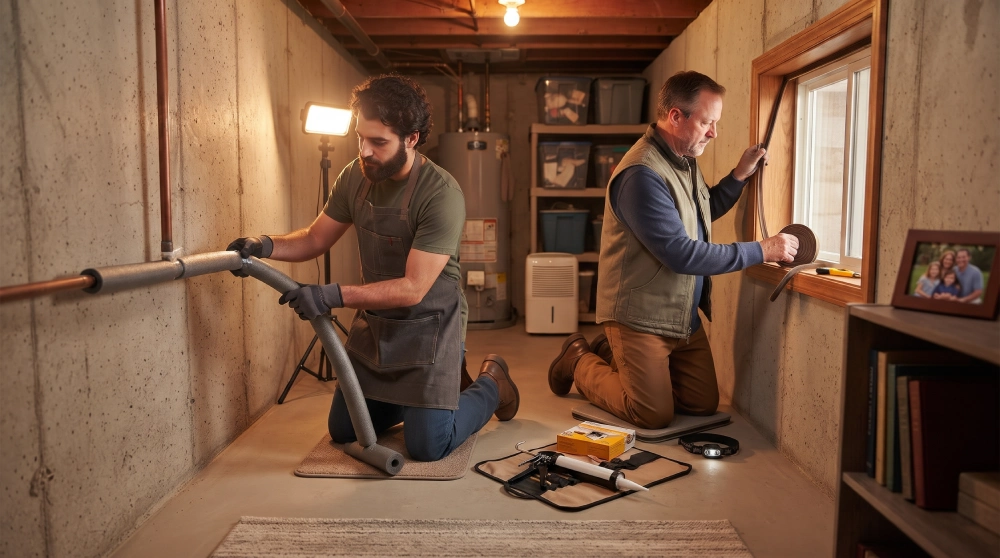
Learning how to winterize a basement requires sealing perimeter drafts, insulating vulnerable plumbing lines, redirecting freeze-thaw runoff away from foundation walls, and verifying that sump pumps are ready for winter power outages. Cold weather introduces unique structural and moisture challenges to sub-grade spaces. Freezing ground prevents surface water absorption, which forces melting snow toward your foundation walls. Meanwhile, indoor heating creates a stack effect that pulls cold air, excess moisture, and soil gases into your living area through lower-level cracks.
Handling basic winter preparations in mid-to-late autumn helps prevent burst pipes, sudden basement flooding, and costly emergency service calls.
Essential Cold-Weather Basement Protection Costs
Winterizing your basement involves a mix of quick DIY maintenance items and targeted equipment updates. While basic pipe insulation sleeves and foam sealants cost under $50, upgrading your mechanical drainage systems to withstand cold-weather outages and heavy snowmelt involves a larger investment.
The table below outlines common equipment and professional installation costs for vital basement drainage components, based on regional market pricing updates.
| Component / System Type | DIY Equipment Cost | Total Installed Cost | Expected Lifespan | Data Source Label |
|---|---|---|---|---|
| 1/3 HP Pedestal Sump Pump | $80 – $180 | $280 – $520 | 8 – 12 years | Sourced |
| 1/3 HP Submersible Pump (Plastic) | $90 – $160 | $320 – $580 | 3 – 5 years | Sourced |
| 1/2 HP Cast-Iron Submersible Pump | $180 – $340 | $450 – $850 | 10 – 15 years | Sourced |
| 3/4 HP Commercial Submersible Pump | $320 – $550 | $650 – $1,150 | 12 – 15 years | Sourced |
| Primary Pump + DC Battery Backup Combo | $450 – $950 | $1,200 – $2,400 | 7 – 10 years | Sourced |
| Water-Powered Backup Pump | $220 – $450 | $750 – $1,500 | 15 – 20 years | Sourced |
Direct DIY parts replacement for an existing standard setup generally ranges from $120 to $350. Standard professional replacements average around $490, while adding high-capacity cast-iron pumps or dual-redundancy backup systems ranges from $1,200 to $2,500.
Exterior Prep: Stopping Water and Freeze Hazards Before First Snow
Protecting your basement from winter water damage begins on the outside of your home. Taking care of drainage pathways before the ground freezes solid ensures that seasonal thaws will not flood your basement floor.
Manage Roof Runoff and Downspouts
A single foot of heavy snow accumulating on a 2,000-square-foot roof yields roughly 1,250 gallons of water when melted. Because snow typically compresses down to about a tenth of its depth in water volume, winter thaw events push massive amounts of water off your eaves over short periods.
Clear all gutters once autumn foliage finishes falling so downspouts can flow freely. If your gutters drop water close to your foundation, factor in typical gutter installation cost options and make sure extensions discharge water at least 6 feet away from exterior basement walls. Ensure rigid or flexible extensions maintain a continuous downward slope, and avoid placing shoveled snow piles directly against your foundation or downhill drainage paths.
Secure Window Wells and Exterior Discharge Lines
Sub-grade window wells collect blowing snow and leaves. Clear out built-in drains and add durable, sloped window well covers to keep out debris. Emergency egress windows require covers that lift easily from the inside without structural binding.
Outside discharge lines connected to sump pumps are particularly vulnerable to ice blockages. If standing water freezes inside a corrugated discharge hose, the pump motor will run continuously against the ice plug until it burns out. Replace flexible corrugated hoses with smooth, rigid pipe set at a steady downward pitch. Installing an exterior relief fitting, often called a freeze guard, allows pumped water to escape through side openings if the main outdoor pipe freezes solid.
Clear Heating and Utility Exhaust Vents
Modern high-efficiency furnaces and direct-vent water heaters exhaust gases through white PVC pipes extending through your basement wall. Heavy snow drifts or snow thrown by a blower can block these pipes, causing your heating system to shut down during freezing weather or pushing carbon monoxide back into the house. Keep vent openings cleared by at least 12 inches above expected snowpack levels, and keep dryer vent hoods clear of lint and ice accumulation.
Interior Tasks: Air Sealing and Plumbing Defense
Once exterior lines and drainage routes are ready, address draft control and plumbing protection inside the basement.
Shut Off and Drain Outdoor Faucets
Trapped water inside sillcocks or exterior supply lines can burst pipes inside your basement walls. Follow these steps before the first hard freeze:
- Disconnect all garden hoses, brass splitters, and hose timers from exterior spigots. Leaving a hose attached keeps water inside frost-free valves, causing them to crack.
- Locate the interior shutoff valve for each outdoor line and close it completely.
- Open the outdoor hose bib to relieve pressure and drain remaining water.
- Place a small bucket under the interior valve’s bleeder cap, loosen the cap to drain residual line water, and tighten it back up.
- Leave the outdoor spigot handle turned to the open position through the winter.
Insulate Vulnerable Plumbing and Seal Rim Joists
Pipes running along exterior concrete walls or ceiling joists near the home foundation edge require thermal protection. Install foam pipe insulation over exposed hot and cold supply lines, securing joints with utility tape to prevent draft exposure.
The rim joist cavity (where the wood house frame sits atop the concrete or block foundation wall) is one of the largest sources of air infiltration in older homes. Cold winter drafts enter through rim joist gaps, cooling domestic water pipes and lowering basement temperatures.
Use expanding spray foam or cut rigid foam board to seal rim joist cavities. Sealing these air leaks stops drafts and limits thermal movement that drives up energy costs. If your basement shows signs of wet wall cracks or shifting concrete during winter thaws, review overall foundation repair cost factors early to address structural issues before severe cold sets in.
Test Primary Sump Pumps and Backup Power
Power outages are common during winter ice storms. Check your pit for dirt or silt, pour several gallons of water into the basin to verify the float switch engages properly, and check valve orientations.
Because standard sump pumps stop running during power loss, consider adding secondary pump protection. A direct battery backup system or a water-powered auxiliary pump provides essential redundancy. Inspecting equipment regularly and estimating potential sump pump replacement cost options ahead of time keeps your system reliable when heavy winter rain or mid-season snowmelts occur.
Monitor Humidity and Radon Gas Levels
Closing up windows for the winter alters indoor air dynamics. Lower winter outdoor temperatures create a chimney effect, drawing soil gas upward into lower level spaces. Test basement radon levels during winter months when your home is closed up. If air testing reveals elevated levels, review radon mitigation system cost structures to select an appropriate active suction system.
Maintain relative humidity in finished or unfinished basements between 30% and 50%. Running a dehumidifier during milder winter days controls moisture without causing coils to freeze over.
When to Call a Professional
While homeowners can complete basic pipe insulating, vent clearing, and downspout extensions themselves, certain winter prep tasks warrant hiring a licensed contractor:
- Plumbing Modifications: If your exterior supply lines lack dedicated interior shutoff valves with bleeder caps, hire a licensed plumber to install frost-proof sillcocks or gate-to-ball valve conversions.
- Sump System Redundancy: Installing dual-pump pits, dedicated electrical circuits, or water-powered backup systems connected to municipal supply lines usually requires professional plumbing and electrical permits.
- HVAC Vent Extensions: If furnace intake and exhaust PVC pipes sit too close to grade level and drift over continuously, have an HVAC technician raise the outdoor termination elbows safely.
- Foundation Sealing: Major wall fractures, structural bowing, or persistent water seepage around footing drains call for a foundation repair specialist to assess structural integrity.
Frequently Asked Questions
Should I leave my basement dehumidifier running all winter?
If your basement stays below 65°F, standard portable dehumidifiers can frost over and stop working effectively. You can turn the unit off during freezing weather if relative humidity stays naturally below 50%, or switch to a low-temperature unit designed for cold spaces.
How do I prevent my outdoor sump pump discharge pipe from freezing?
Use smooth, rigid PVC pipe sloped continuously downward away from the home instead of corrugated hose. Installing a freeze guard fitting where the pipe exits the wall gives water an alternate exit path if the main line iced over downstream.
Why does my basement leak more during a winter thaw than a rainstorm?
During a thaw, the top layer of surrounding soil often remains frozen solid and cannot absorb water. Snow melting off your roof has nowhere to go except across the frozen surface toward your foundation, putting intense hydrostatic pressure against basement walls.
Are frost-free outdoor faucets completely freeze-proof?
No. A frost-free faucet relies on a long internal stem to keep the shutoff valve inside your warm basement. If a garden hose stays connected, it traps water inside the stem, which will freeze, expand, and split the pipe inside your wall.

